Sadaf Bukhari 1 , Hafiza Sana Ashraf 2 , Zain ul Abbas 3 , Nimra Zulfiqar 4 ,
Muhammad Akmal Nawaz 5 , Zarqa Sharif 6
Authors affiliations:
Background & Objective: When someone has coronary artery disease, surgeons may perform a coronary artery bypass graft (CABG) to create a new route for blood to reach the narrowed heart arteries. CABG procedures may increase the risk of patients having pulmonary issues after surgery. The usefulness of active cycle of breathing technique (ACBT) in patients who undergo CABG to lower the risk of lung problems has not been widely recognized or experienced in Pakistan. Therefore, the purpose was to determine the effects of pre and postoperative ACBT on oxygen saturation (SpO2), arterial blood gas (ABG), and respiratory rate (RR) after coronary artery bypass graft surgery (CABG).
Methodology: The randomized controlled trial took place from March to May 2024 at the Faisalabad Institute of Cardiology (FIC) in Faisalabad. The elected 72 patients both men and women of ages 35 to 65 were randomized using lottery method to place equal numbers of participants in each group (n = 36 each). ACBT was applied in addition to routine chest physical therapy in the intervention group, while the control group received only routine chest therapy. Both patient groups had their arterial blood gases (ABG), oxygen saturation (SpO₂) and respiratory rate (RR) checked at baseline and upto five days after surgery (daily).
Results: There were significant differences between the groups for RR, SpO₂ and PaCO₂ over all the postoperative days (p < 0.001). Nevertheless, there was no noticeable difference in PaO₂ on Day 3 (P = 0.977), in HCO₃ on Day 3 (P = 0.145) and 4 (P = 0.84), nor in pH on Days 2 (P = 0.158) and 3 (P = 0.017). SpO₂ in the control group was 95 (95–96) at the start, climbed to 99 (98–99.4) on Day 1, then dropped to 95 (95–96) by Day 5. RR went up to 28 (27.25–30) on Day 5. For the intervention group, the SpO₂ went from 95 (95–96.75) at the beginning to 99 (98.25–100) by Day 5 and the RR was reduced from 30 (19–31) on Day 1 down to 22 (20–24) on Day 5. Within the control group, SpO₂ went down to 81% and RR went up to 36 ± 3.75 on Day 3 which indicates the respiratory system had not returned to normal as fast as the intervention group.
Conclusion: The findings of our study suggest that ‘active cycle of breathing technique’ is more effective than the routine chest physical therapy alone for improving hemodynamic and respiratory parameters including ABG, RR, and SpO2 after CABG.
Abbreviations: ABG: arterial blood gas, ACBT: Active cycle breathing technique, CABG: Coronary artery bypass graft, RR: respiratory rate
Keywords: Active cycle breathing technique; Arterial blood gasses; Coronary artery bypass graft; Oxygen saturation; postoperative; pulmonary complications; Respiratory rate
Citation: Bukhari SB, Ashraf HS, Abbas ZU, Zulfiqar N, Nawaz MA, Sharif Z. Effects of pre- and post-operative active cycle of breathing technique as an add-on to routine chest physical therapy on respiratory parameters in coronary artery bypass graft patients. Anaesth. pain intensive care 2025;29 (8):962-970. DOI: 10.35975/apic.v29i8.3026
Received: May 09, 2025; Revised: October 26, 2025; Accepted: January 01, 2025
According to the World Health Organization (WHO), cardiovascular diseases account for approximately 17.9 million deaths each year, constituting roughly 32% of the global mortality rate.1 Coronary artery disease (CAD) has become an epidemic in recent years in Southeast Asia, particularly in Pakistan.2 Heart bypass surgery also known as coronary artery bypass grafting (CABG) is a surgical procedure that enhances the blood flow to ischemic cardiac tissues by creating bypasses around the clogged arteries.3 Individuals who have had bypass surgery are more likely to develop pulmonary complications and oxygenation disorders.4 CABG is an invasive surgery, with several risks associated with intubation, including airway damage, infection, pain, shortness of breath and the impact of anesthesia leads to various complications.5 The pulmonary complications include arterial blood gas disturbance, respiratory failure, decreased lung volumes and capacities, and respiratory muscle dysfunction.6
The incidence of pulmonary complications after surgery is 30 to 60%.7 Furthermore, certain preoperative factors play a role in postoperative pulmonary complications including pre-existing lung conditions, older age, smoking history, obesity, obstructive sleep apnea (OSA), heart failure, and inadequate nutrition.8 Increased levels of blood C-reactive protein (CRP), cortisol, and inflammatory markers significantly affect respiratory muscles, leading to reduced protein synthesis.9 When respiratory muscle contractions are compromised, ventilation is impaired, resulting in decreased respiratory volumes.10 Initiating a rehabilitation program after CABG surgery is an essential component of the management plan.11 Cardiopulmonary rehabilitation provides education and counseling to individuals with heart conditions minimize their risk of future heart issues by enhancing physical fitness and overall health.12 Primary methods in cardiopulmonary rehabilitation are active cycle of breathing techniques, deep breathing exercises, percussion, and the use of an incentive spirometer.13 These techniques may increase lung volumes and capacity, oxygen saturation.14
ACBT is a cycle of breathing exercises commonly used to help patients with respiratory diseases and postoperative conditions improve their lung functions.15 Literature reports, ACBT and chest physiotherapy has the potential to reduce post-operative pulmonary complications.16 ACBT combined with routine chest physiotherapy, increases ventilation, raises oxygen saturation, reduces discomfort or pain, and prevents respiratory acidosis.17 The combined use of ACBT and incentive spirometer are frequently used in CABG patients.18 Derakhtanjani et al. conducted a study which concluded that ACBT and routine chest physical therapy both had equal effects on ABG, arterial oxygenation and pain after CABG.19. Charity et al. and Westerdahl et al. also concluded in their studies that evidence supporting the positive outcomes in the use of ACBT as breathing exercise in improving pulmonary functions in CABG patients.20,21 According to another study who compared ACBT with routine chest physical therapy proved that ACBT is more beneficial in improving respiratory rate, oxygen saturation and chest expansion.22
This study aims to determine the effects of the ACBT and routine chest physical therapy in reducing postoperative pulmonary dysfunction while closely monitored arterial blood gas, oxygen saturation, and respiratory rate in coronary artery bypass graft patients. The effectiveness of the ACBT contributes to the development of evidence-based practice for the preoperative and postoperative treatment of CABG patients. There is still lack of evidence and only few studies available on ACBT, showed differences and effects of the technique over these parameters.
Between December 2023 and May 2024, at Faisalabad Institute of Cardiology, this randomized controlled trial was carried out. The trial was recorded on ClinicalTrials.gov (with identifier NCT06705556) once approval was given by the University of Faisalabad’s Research and Ethics Committee (Ref: TUF/IRB/292/24).
The research considered both men and women of 35 to 65 years who had a medical history of stable coronary artery disease for at least 15 years and were taking part in elective coronary artery bypass (CABG) surgery. Patients having unstable vitals, preoperative lung problems, COPD, emphysema, asthma, severe atelectasis, renal problems or need ventilator support for more than 48 hours after the procedure, were excluded.
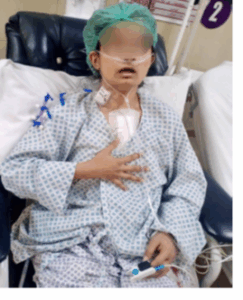
Figure 1: Patient performing ACBTs
Using OpenEpi software and setting the significance level to 95% (Z₁-α/2) and the power to 80% (Z₁-β), mean change expected in Group A is 23.6 (SD = 2.32) and in Group B is 25.71 (SD = 3.4).23 This gave a required sample size of 30 participants per group. After adding 20% dropout rate, the sample size rose to 36 participants in each group and there were 72 participants overall. The technique selected was non-probability purposive sampling, followed by a screening of people using set criteria. Once written informed consent was given, the eligible participants were randomly assigned (1:1) to the interventional and conventional groups in a randomizing program (lottery method). Patient enrolment was ensured by an independent researcher not involved in patient care and allocation concealment was achieved utilizing sequentially numbered, sealed, opaque envelopes. Selection bias was avoided because the envelopes were opened after a consent inclusion decision was made.
The study was single-blinded in which the assessor was blind. A self-administered questionnaire was designed to collect demographic data including age, gender, BMI, hypertension, diabetes and smoking status. An oxygen saturation reader (pulse oximeter) was attached to the patient to show how much oxygen she was getting and a cardiac monitor was used to read her breathing rate whereas Blood gas analyzer machine was used to analyze ABGs. Before taking the sample, the procedure was described to the patient, and consent was taken.
Palpate the patient's brachial artery over the cubital fossa, clean the surface with an alcohol wipe, and administer local anesthetic subcutaneously over the target site. Remove the cover from the ABG needle and flush the heparin from a syringe. Support the patient's arm over the pillow and insert the ABG needle at an angle of 30-45°. When the ABG needle was self-filled and a desired amount of blood was collected, the needle was removed and immediate pressure was applied over the puncture site for about 3-5 minutes. Hold the gauze with tape, and keep applying pressure. ABG needle was removed from the syringe and discarded into a bin. A cap was placed over the ABG syringe. The ABG syringe was labeled with the patient's name. The ABG sample was obtained under local anesthesia once at baseline, after surgery an arterial line was placed in the patients’ brachial artery through which the sample was collected and analyzed using the ABG analyzer machine. Pulse oximeter was used to measured oxygen saturation and cardiac monitor was used to measure respiratory rate.
2.1. Interventions
2.1.1. Control Group
The routine chest physical therapy was performed 3 days before surgery at the preoperative bay and 5 days after surgery in the ICU with 3 sessions each day. Preoperative chest physical therapy sessions were followed as: Incentive spirometry (3 sessions per day with 10 repetitions each time), Percussions (3 sessions per day with 20 repetitions) and 3-minutes walking (2 sessions per day). The preoperative chest physiotherapy treatment plan was continued after CABG surgery. In addition to these, the following were included postoperatively: Nebulization- three times a day, 3-5 minutes walking- twice a day (as per patient condition). The “Life Care” incentive spirometer device was used in the current step-up. The one-ball and 3 balls (tri-flow) were over 600cc to 1200cc volume per second IS used. The IS were performed during the sessions and afterward, patients and their attendants were guided to repeat it every 2 hours to maintain changes in RR, ABG, and SpO2 over time. The PaCO2 has a direct relation with RR and an inverse relation with pH in the case of increased PaCO2 above 45mmHg then 1 session of blow bottle exercise was performed which had a direct effect on pH and respiratory rates have returned to normal.
2.1.2. Interventional Group
Patients were instructed to perform ACBT in addition to routine chest physical therapy, before and after surgery.24 In ACBT, they were instructed to do “6-8 relaxed breaths” (normal tummy breaths), then taking 3 deep breaths and holding them for 3 seconds at the bottom of their lungs. Followed by this, they repeated 6–8 normal relaxed breaths, again took 3 deep breaths at bottom of lungs with hold for 3 seconds and ended with another set of 6–8 relaxed normal tummy breaths. The last step of the cycle was “huffing-followed by coughing” where huffing was to make two medium breaths out slowly through the mouth as if fogging-up a mirror. Number of sessions, repetitions and nebulization medicines given to the intervention group were the same as those given to the control group. At the pre-surgery stage, ACBT was given three times per day and it continued to be done for up to five days in the ICU after CABG.
The ABG, SpO2, and RR were assessed once at baseline prior to surgery. When the patients in both groups were stable after surgery and the endotracheal tube removed, the ABG, RR, and SpO2 were monitored every 2 hours on postoperative days 1, 2, and 3, and every 4 hours on days 4 and 5 following the chest physical therapy interventions.
2.2. Statistical Analysis
Data was entered into a statistical package for social sciences (SPSS) version 21.00. Mean and standard deviation were calculated for numerical variables whereas frequencies & percentages were taken for qualitative variables. The normality of data was checked through the Kolmogorov Smirnov test and the results of this test showed that data were non-normally distributed therefore, nonparametric tests were used for further analysis. Within-group comparisons were assessed using Friedman’s test. For between-group comparisons, the Mann-Whitney U test was utilized. A p-value equal to or less than 0.05 was considered significant
The Kolmogorov-Smirnov test indicated that respiratory rate, SpO2 saturation, PaCO2 levels, PaO2 levels, HCO3, and pH were non-normally distributed (P < 0.05). Therefore, non-parametric tests; Friedman test and Mann-Whitney U test were applied. For pH levels, no significant difference was noted preoperative (P=0.639), but significant differences were observed on most postoperative days except for Day 2 (P=0.158) and Day 3 (P = 0.017).
Preoperative PaCO2 did not differ significantly (P=0.516), but significant differences were found on all postoperative days (P < 0.001). Similarly, PaO2 showed no difference preoperative (P=0.502) but found significant differences on all postoperative days except Day 3 (P=0.977). The HCO3 mEq/L levels showed significant differences on most postoperative days, except for Day 3 (P=0.145) and Day 4 (P=0.840). Overall, the intervention group demonstrated better outcomes in respiratory rate, SpO2, PaCO2, PaO2, HCO3, and pH levels compared to the control group. In the control group, recovery of RR was significant, peaking at 36 (34–37.75) on the third day, while SpO2 dropped to a minimum of 81 (80–82) on the second day before getting better by the fifth day.
The Friedman test revealed significant differences in all parameters over five days of the early postoperative period. For the intervention group, initially, the preoperative respiratory rate stood at 18 breaths per minute and showed a significant increase to 30 breaths per minute on Days 1, 2, and 33 on Day 3. Subsequently, it gradually returned to normal to 28 and 22 breaths per minute on Days 4 and 5, respectively. Friedman’s test indicated that there were significant changes in oxygen saturation among the intervention group x2 (5) =97.409, (p <0.001).
Initially, the preoperative respiratory rate stood at 18 breaths per minute and showed a significant increase to 30 breaths per minute on Days 1, 2, and 33 on Day 3. Subsequently, it gradually returned to normal to 28 and 22 breaths per minute on Days 4 and 5, respectively with statistically significant differences.
Using Mann Whitney U test, in Table 4, comparison was done between both groups in terms of ABGs, RR, SpO2. For pH levels, significant differences were observed at all postoperative days between the groups (P < .001), except for Day 2 (P = .158) and Day 3 (P = .017). In terms of PaCO2 mmHg levels, significant differences were observed at all postoperative days (Day 1 to 5) between the groups (P < .001), except for the preoperative PaCO2 mmHg (P = .516). For PaO2 levels, significant differences were noted at all postoperative days between the groups (P < .001), except for Day 3 (P = .977).
Regarding HCO3 mEq/L levels, significant differences were found on postoperative days 1, 2, and 5 between the groups (P < .001) while no significant differences were observed on Day 3 (P = .145) and Day 4 (P = .840). In comparison to the control group, the intervention group showed better outcomes in respiratory rate, SpO2, PaCO2, PaO2, HCO3, and pH levels after surgery.t has also been seen in Table 5 that there were no significant differences observed at preoperative SpO2 between groups while after surgery the intervention group showed a better outcome on all postoperative days as compared to the control group (<0.001). There were no significant differences in the preoperative respiratory rate between groups (P = 0.515). However, significant differences were observed in respiratory rates at all postoperative days (P < 0.001).
The study demonstrates that active cycle of breathing technique as add on to routine chest physical therapy significantly improved respiratory parameters after CABG surgery except day 2 and 3. The improvements in respiratory parameters is demonstrated by the increase in arterial blood gas, respiratory rate and oxygen saturation. This study disclosed that both groups manifested improvement in restoring the normal oxygen saturation and ABGs, but intervention group showed little more improvement as compare to control group.
In the current study, ACBT as add on to routine chest physical therapy improved arterial blood gas, respiratory rate and oxygen saturation in post CABG patients. There were significant improvements of respiratory parameters from baseline to postoperative day 5th. In 2022, Nouman et al. studied the effects of ACBT with conventional treatment on FEV1, SpO2, RR and chest expansion. They found that ACBT is better in effects as compared to conventional physical therapy.22 Another study found that ACBT and routine chest physiotherapy produced comparable improvements in arterial oxygenation, heart rate, and pain after CABG surgery, in contrast to our results demonstrate that ACBT yielded a significant improvement in ABG values and SpO₂ five days post-operatively.19 There were statistical and clinical improvements in ABG, SpO2 of both the groups signifying that the deep breathing in ACBT and incentive spirometer equally effective in preventing and treating complications after CABG surgery.25 Similar results were found when compared ACBT with incentive spirometer after CABG surgery, that both interventions were the reason for improvements in respiratory functions.26
Yazdannik A et al. stated that PaO2, SpO2, and PaCO2, significantly improved with routine chest physical therapy after CABG surgery.27 However, current study assesses the effects of ACBT and routine chest physiotherapy techniques on PaO2 PaCO2 and SpO2, HCO3, and RR. Another study increases oxygen saturation with help of breathing exercises.28 Mordianet al. concluded that combined use of deep breathing exercise and incentive spirometer improved ABG and SpO2, after CABG surgery.29
A few studies available regarding ACBT and routine chest physical therapy before and after surgery for the treatment of ABG, RR and SpO2 simultaneously, even there is not a single study available who suggest ACBT over routine chest physical therapy. And none of the above studies mentioned the use of these techniques as a treatment option before and after CABG surgery.
This study concluded that ACBT is better in effects as compared to routine chest physical therapy for improving arterial blood gas, oxygen saturation and respiratory rate of all postoperative days except day 2 and day 3. Both ACBT and routine chest physical therapy improved respiratory parameters. But as far as improvements in respiratory parameters there is significant difference after surgery in patients receiving ACBT intervention.
HSA: Reviewed & revised critically for important intellectual content.
ZA: Proofreading of final submitted manuscript.
NZ: Interpretation of data.
MAN: Analysis of data.
ZS: Drafting and Revision of work.
All authors had approved the final manuscript for submission and declare that the manuscript has not been previously published or submitted anywhere else.
Muhammad Akmal Nawaz 5 , Zarqa Sharif 6
Authors affiliations:
- Sadaf Bukhari, Department of Physical Therapy, The University of Faisalabad, Faisalabad, Pakistan
- Hafiza Sana Ashraf, Department of Physical Therapy, University of Lahore, Lahore, Pakistan; E-mail: sana.ashraf@uipt.uol.edu.pk
- Zain ul Abbas, Department of Physical Therapy, Sehat Medical Complex, Hanjarwal, Lahore, Pakistan
- Nimra Zulfiqar, Department of Physical Therapy, University of Lahore, Lahore, Pakistan.
- Muhammad Akmal Nawaz, Department of Physical Therapy, Sehat Medical Complex, Hanjarwal, Lahore, Pakistan.
- Zarqa Sharif, Department of Physical Therapy, Superior University, Lahore, Pakistan.
ABSTRACT
Background & Objective: When someone has coronary artery disease, surgeons may perform a coronary artery bypass graft (CABG) to create a new route for blood to reach the narrowed heart arteries. CABG procedures may increase the risk of patients having pulmonary issues after surgery. The usefulness of active cycle of breathing technique (ACBT) in patients who undergo CABG to lower the risk of lung problems has not been widely recognized or experienced in Pakistan. Therefore, the purpose was to determine the effects of pre and postoperative ACBT on oxygen saturation (SpO2), arterial blood gas (ABG), and respiratory rate (RR) after coronary artery bypass graft surgery (CABG).
Methodology: The randomized controlled trial took place from March to May 2024 at the Faisalabad Institute of Cardiology (FIC) in Faisalabad. The elected 72 patients both men and women of ages 35 to 65 were randomized using lottery method to place equal numbers of participants in each group (n = 36 each). ACBT was applied in addition to routine chest physical therapy in the intervention group, while the control group received only routine chest therapy. Both patient groups had their arterial blood gases (ABG), oxygen saturation (SpO₂) and respiratory rate (RR) checked at baseline and upto five days after surgery (daily).
Results: There were significant differences between the groups for RR, SpO₂ and PaCO₂ over all the postoperative days (p < 0.001). Nevertheless, there was no noticeable difference in PaO₂ on Day 3 (P = 0.977), in HCO₃ on Day 3 (P = 0.145) and 4 (P = 0.84), nor in pH on Days 2 (P = 0.158) and 3 (P = 0.017). SpO₂ in the control group was 95 (95–96) at the start, climbed to 99 (98–99.4) on Day 1, then dropped to 95 (95–96) by Day 5. RR went up to 28 (27.25–30) on Day 5. For the intervention group, the SpO₂ went from 95 (95–96.75) at the beginning to 99 (98.25–100) by Day 5 and the RR was reduced from 30 (19–31) on Day 1 down to 22 (20–24) on Day 5. Within the control group, SpO₂ went down to 81% and RR went up to 36 ± 3.75 on Day 3 which indicates the respiratory system had not returned to normal as fast as the intervention group.
Conclusion: The findings of our study suggest that ‘active cycle of breathing technique’ is more effective than the routine chest physical therapy alone for improving hemodynamic and respiratory parameters including ABG, RR, and SpO2 after CABG.
Abbreviations: ABG: arterial blood gas, ACBT: Active cycle breathing technique, CABG: Coronary artery bypass graft, RR: respiratory rate
Keywords: Active cycle breathing technique; Arterial blood gasses; Coronary artery bypass graft; Oxygen saturation; postoperative; pulmonary complications; Respiratory rate
Citation: Bukhari SB, Ashraf HS, Abbas ZU, Zulfiqar N, Nawaz MA, Sharif Z. Effects of pre- and post-operative active cycle of breathing technique as an add-on to routine chest physical therapy on respiratory parameters in coronary artery bypass graft patients. Anaesth. pain intensive care 2025;29 (8):962-970. DOI: 10.35975/apic.v29i8.3026
Received: May 09, 2025; Revised: October 26, 2025; Accepted: January 01, 2025
1. INTRODUCTION
According to the World Health Organization (WHO), cardiovascular diseases account for approximately 17.9 million deaths each year, constituting roughly 32% of the global mortality rate.1 Coronary artery disease (CAD) has become an epidemic in recent years in Southeast Asia, particularly in Pakistan.2 Heart bypass surgery also known as coronary artery bypass grafting (CABG) is a surgical procedure that enhances the blood flow to ischemic cardiac tissues by creating bypasses around the clogged arteries.3 Individuals who have had bypass surgery are more likely to develop pulmonary complications and oxygenation disorders.4 CABG is an invasive surgery, with several risks associated with intubation, including airway damage, infection, pain, shortness of breath and the impact of anesthesia leads to various complications.5 The pulmonary complications include arterial blood gas disturbance, respiratory failure, decreased lung volumes and capacities, and respiratory muscle dysfunction.6
The incidence of pulmonary complications after surgery is 30 to 60%.7 Furthermore, certain preoperative factors play a role in postoperative pulmonary complications including pre-existing lung conditions, older age, smoking history, obesity, obstructive sleep apnea (OSA), heart failure, and inadequate nutrition.8 Increased levels of blood C-reactive protein (CRP), cortisol, and inflammatory markers significantly affect respiratory muscles, leading to reduced protein synthesis.9 When respiratory muscle contractions are compromised, ventilation is impaired, resulting in decreased respiratory volumes.10 Initiating a rehabilitation program after CABG surgery is an essential component of the management plan.11 Cardiopulmonary rehabilitation provides education and counseling to individuals with heart conditions minimize their risk of future heart issues by enhancing physical fitness and overall health.12 Primary methods in cardiopulmonary rehabilitation are active cycle of breathing techniques, deep breathing exercises, percussion, and the use of an incentive spirometer.13 These techniques may increase lung volumes and capacity, oxygen saturation.14
ACBT is a cycle of breathing exercises commonly used to help patients with respiratory diseases and postoperative conditions improve their lung functions.15 Literature reports, ACBT and chest physiotherapy has the potential to reduce post-operative pulmonary complications.16 ACBT combined with routine chest physiotherapy, increases ventilation, raises oxygen saturation, reduces discomfort or pain, and prevents respiratory acidosis.17 The combined use of ACBT and incentive spirometer are frequently used in CABG patients.18 Derakhtanjani et al. conducted a study which concluded that ACBT and routine chest physical therapy both had equal effects on ABG, arterial oxygenation and pain after CABG.19. Charity et al. and Westerdahl et al. also concluded in their studies that evidence supporting the positive outcomes in the use of ACBT as breathing exercise in improving pulmonary functions in CABG patients.20,21 According to another study who compared ACBT with routine chest physical therapy proved that ACBT is more beneficial in improving respiratory rate, oxygen saturation and chest expansion.22
This study aims to determine the effects of the ACBT and routine chest physical therapy in reducing postoperative pulmonary dysfunction while closely monitored arterial blood gas, oxygen saturation, and respiratory rate in coronary artery bypass graft patients. The effectiveness of the ACBT contributes to the development of evidence-based practice for the preoperative and postoperative treatment of CABG patients. There is still lack of evidence and only few studies available on ACBT, showed differences and effects of the technique over these parameters.
2. METHODOLOGY
Between December 2023 and May 2024, at Faisalabad Institute of Cardiology, this randomized controlled trial was carried out. The trial was recorded on ClinicalTrials.gov (with identifier NCT06705556) once approval was given by the University of Faisalabad’s Research and Ethics Committee (Ref: TUF/IRB/292/24).
The research considered both men and women of 35 to 65 years who had a medical history of stable coronary artery disease for at least 15 years and were taking part in elective coronary artery bypass (CABG) surgery. Patients having unstable vitals, preoperative lung problems, COPD, emphysema, asthma, severe atelectasis, renal problems or need ventilator support for more than 48 hours after the procedure, were excluded.
Figure 1: Patient performing ACBTs
Using OpenEpi software and setting the significance level to 95% (Z₁-α/2) and the power to 80% (Z₁-β), mean change expected in Group A is 23.6 (SD = 2.32) and in Group B is 25.71 (SD = 3.4).23 This gave a required sample size of 30 participants per group. After adding 20% dropout rate, the sample size rose to 36 participants in each group and there were 72 participants overall. The technique selected was non-probability purposive sampling, followed by a screening of people using set criteria. Once written informed consent was given, the eligible participants were randomly assigned (1:1) to the interventional and conventional groups in a randomizing program (lottery method). Patient enrolment was ensured by an independent researcher not involved in patient care and allocation concealment was achieved utilizing sequentially numbered, sealed, opaque envelopes. Selection bias was avoided because the envelopes were opened after a consent inclusion decision was made.
The study was single-blinded in which the assessor was blind. A self-administered questionnaire was designed to collect demographic data including age, gender, BMI, hypertension, diabetes and smoking status. An oxygen saturation reader (pulse oximeter) was attached to the patient to show how much oxygen she was getting and a cardiac monitor was used to read her breathing rate whereas Blood gas analyzer machine was used to analyze ABGs. Before taking the sample, the procedure was described to the patient, and consent was taken.
Palpate the patient's brachial artery over the cubital fossa, clean the surface with an alcohol wipe, and administer local anesthetic subcutaneously over the target site. Remove the cover from the ABG needle and flush the heparin from a syringe. Support the patient's arm over the pillow and insert the ABG needle at an angle of 30-45°. When the ABG needle was self-filled and a desired amount of blood was collected, the needle was removed and immediate pressure was applied over the puncture site for about 3-5 minutes. Hold the gauze with tape, and keep applying pressure. ABG needle was removed from the syringe and discarded into a bin. A cap was placed over the ABG syringe. The ABG syringe was labeled with the patient's name. The ABG sample was obtained under local anesthesia once at baseline, after surgery an arterial line was placed in the patients’ brachial artery through which the sample was collected and analyzed using the ABG analyzer machine. Pulse oximeter was used to measured oxygen saturation and cardiac monitor was used to measure respiratory rate.
| Table 1: Descriptive statistics for demographic data | ||||
| Variables | Interventional group | Control group | P-value | |
| Age | 53.64 ± 5.82 | 55.75 ± 4.19 | > 0.05 | |
| Gender | Male | 25 (69.4) | 29 (80.6) | > 0.05 |
| Female | 11 (30.6) | 7 (19.4 ) | ||
| Smoking | 13 (36.1) | 25 (69.4) | > 0.05 | |
| Hypertension | 24 (66.7) | 26 (72.2) | > 0.05 | |
| Diabetes Mellitus | 28 (77.8) | 26 (72.2) | > 0.05 | |
| Data are presented as mean ± SD or n (%0; P < 0,05 is significant | ||||
2.1. Interventions
2.1.1. Control Group
The routine chest physical therapy was performed 3 days before surgery at the preoperative bay and 5 days after surgery in the ICU with 3 sessions each day. Preoperative chest physical therapy sessions were followed as: Incentive spirometry (3 sessions per day with 10 repetitions each time), Percussions (3 sessions per day with 20 repetitions) and 3-minutes walking (2 sessions per day). The preoperative chest physiotherapy treatment plan was continued after CABG surgery. In addition to these, the following were included postoperatively: Nebulization- three times a day, 3-5 minutes walking- twice a day (as per patient condition). The “Life Care” incentive spirometer device was used in the current step-up. The one-ball and 3 balls (tri-flow) were over 600cc to 1200cc volume per second IS used. The IS were performed during the sessions and afterward, patients and their attendants were guided to repeat it every 2 hours to maintain changes in RR, ABG, and SpO2 over time. The PaCO2 has a direct relation with RR and an inverse relation with pH in the case of increased PaCO2 above 45mmHg then 1 session of blow bottle exercise was performed which had a direct effect on pH and respiratory rates have returned to normal.
| Table 2: Comparison of pre and postoperative variable values within the Control Group- Friedman Test | ||||||
| Measure-ments | Median Interquartile range for all variables | |||||
| pH | PaCO₂ (mmHg) | PaO₂ (mmHg) | HCO₃ (mmol/L) | RR (/min) | SpO₂ (%) | |
| Preop | 7.42 ± 0.05 | 42 ± 2 | 85 ± 0 | 25 ± 4 | 18.5 ± 1.8 | 95 ± 1 |
| Day 1 | 7.34 ± 0.10 | 33 ± 2 | 110 ± 14 | 21 ± 1 | 16 ± 2 | 99 ± 1.4 |
| Day 2 | 7.40 ± 0.12 | 34 ± 2.8 | 80 ± 0 | 22 ± 1 | 20 ± 1.5 | 81 ± 2 |
| Day 3 | 7.45 ± 0.00 | 47 ± 3 | 90 ± 0 | 25.5 ± 4 | 36 ± 3.8 | 90 ± 10 |
| Day 4 | 7.50 ± 0.06 | 44.5 ± 2.5 | 90 ± 10 | 24 ± 3.8 | 30 ± 1 | 92 ± 2 |
| Day 5 | 7.45 ± 0.05 | 35.2 ± 0.8 | 110 ± 10.8 | 27.5 ± 3 | 28 ± 2.8 | 95 ± 1 |
| *All comparisons across days were significant at the level of statistical probability < 0.001 | ||||||
| Table 3: Comparison of pre and postoperative variable values within the Interventional Group- Friedman Test | |||||||
| Variables | Preoperative | Day 1 | Day 2 | Day 3 | Day 4 | Day 5 | |
| pH | Median (IQR) | 7.45 (7.4-7.45) | 7.38 (7.30-7.32) | 7.4 (7.40-7.45) | 7.45 (7.40-7.45) | 7.45 (7.40-7.45) | 7.4 (7.40-7.45) |
| Rank | 3.94 | 1.44 | 3.58 | 4.11 | 4.33 | 3.58 | |
| PaCO2 | Median (IQR) | 42.50 (41-43) | 35 (34-35) | 45 (45-45) | 48 (48-49) | 38 (37.25-41.75) | 34.14 (33-35) |
| Rank | 3.82 | 2.07 | 4.99 | 5.93 | 2.71 | 1.49 | |
| PaO2 | Median (IQR) | 85 (85-85) | 120 (115-120) | 95 (90-110) | 90 (85-95) | 110 (105-120) | 120 (120-120) |
| Rank | 1.28 | 5.06 | 3.03 | 2.03 | 4.25 | 5.36 | |
| HCO3 | Median (IQR) | 26 (22.25-28) | 26 (22.25-28) | 27 (26-28) | 26.50 (25.25-28) | 24 (22-25) | 22 (22-23.50) |
| Rank | 3.81 | 3.99 | 4.21 | 4.21 | 2.81 | 1.99 | |
| RR | Median (IQR) | 18 (18-19) | 30 (19-31) | 30.50 (30-31) | 33 (31-35) | 28.50 (27.25-29.75) | 22 (2-24) |
| Rank | 1.21 | 3.51 | 4.60 | 5.63 | 3.69 | 2.36 | |
| SpO2 | Median (IQR) | 95 (95-96.75) | 98 (96-98) | 95 (95-95.75) | 93 (92-95) | 98 (97-98) | 99 (98.25-100) |
| Rank | 2.82 | 3.94 | 2.75 | 1.81 | 4.21 | 5.47 | |
| *All comparisons across days were significant at the level of statistical probability < 0.001. | |||||||
2.1.2. Interventional Group
Patients were instructed to perform ACBT in addition to routine chest physical therapy, before and after surgery.24 In ACBT, they were instructed to do “6-8 relaxed breaths” (normal tummy breaths), then taking 3 deep breaths and holding them for 3 seconds at the bottom of their lungs. Followed by this, they repeated 6–8 normal relaxed breaths, again took 3 deep breaths at bottom of lungs with hold for 3 seconds and ended with another set of 6–8 relaxed normal tummy breaths. The last step of the cycle was “huffing-followed by coughing” where huffing was to make two medium breaths out slowly through the mouth as if fogging-up a mirror. Number of sessions, repetitions and nebulization medicines given to the intervention group were the same as those given to the control group. At the pre-surgery stage, ACBT was given three times per day and it continued to be done for up to five days in the ICU after CABG.
The ABG, SpO2, and RR were assessed once at baseline prior to surgery. When the patients in both groups were stable after surgery and the endotracheal tube removed, the ABG, RR, and SpO2 were monitored every 2 hours on postoperative days 1, 2, and 3, and every 4 hours on days 4 and 5 following the chest physical therapy interventions.
| Table 4: Comparison of pre and postoperative Arterial Blood Gas between Groups | ||||
| Variables | Control Group | Intervention Group | P value | |
| Preoperative pH | 612 | 7.42 (7.4-7.45) | 7.45 (7.4-7.45) | 0.639 |
| Day 1 | 439 | 7.34 (7.3-7.4) | 7.38 (7.30-7.32) | 0.012 |
| Day 2 | 532 | 7.4 (7.33-7.45) | 7.4 (7.40-7.45) | 0.158 |
| Day 3 | 486 | 7.45 (7.45-7.45) | 7.45 (7.40-7.45) | 0.017 |
| Day 4 | 215 | 7.5 (7.45-7.51) | 7.45 (7.40-7.45) | < 0.001 |
| Day 5 | 415 | 7.45 (7.40-7.45) | 7.4 (7.40-7.45) | < 0.001 |
| Preoperative PaCO2 | 591 | 42 (41-43) | 42.50 (41-43) | 0.516 |
| Day 1 | 248 | 33 (32-34) | 35 (34-35) | < 0.001 |
| Day 2 | .00 | 34 (32.25-35) | 45 (45-45) | < 0.001 |
| Day 3 | 391 | 47 (45-48) | 48 (48-49) | < 0.001 |
| Day 4 | 22 | 44.5 (44-46.50) | 38 (37.25-41.75) | < 0.001 |
| Day 5 | 404.5 | 35.22 (35-35.75) | 34.14 (33-35) | < 0.001 |
| Preoperative PaO2 | 615 | 85 (85-85) | 85 (85-85) | 0.502 |
| Day 1 | 298.5 | 110 (105-119) | 120 (115-120) | < 0.001 |
| Day 2 | 27 | 80 (80-80) | 95 (90-110) | < 0.001 |
| Day 3 | 645 | 90 (90-90) | 90 (85-95) | 0.977 |
| Day 4 | 114 | 90 (85-95) | 110 (105-120) | < 0.001 |
| Day 5 | 191 | 110 (105-115.75) | 120 (120-120) | < 0.001 |
| Preoperative HCO3 | 578 | 25 (23-27) | 26 (22.25-28) | 0.431 |
| Day 1 | 124 | 21 (21-22) | 26 (22.25-28) | < 0.001 |
| Day 2 | 24 | 22 (21-22) | 27 (26-28) | < 0.001 |
| Day 3 | 522 | 25.50 (24-28) | 26.50 (25.25-28) | 0.145 |
| Day 4 | 630 | 24 (22-25.75) | 24 (22-25) | 0.840 |
| Day 5 | 177 | 27.50 (25-28) | 22 (22-23.50) | < 0.001 |
| Data presented as Median (IQR); Mann Whitney U Test was applied; P < 0.05 is significant | ||||
2.2. Statistical Analysis
Data was entered into a statistical package for social sciences (SPSS) version 21.00. Mean and standard deviation were calculated for numerical variables whereas frequencies & percentages were taken for qualitative variables. The normality of data was checked through the Kolmogorov Smirnov test and the results of this test showed that data were non-normally distributed therefore, nonparametric tests were used for further analysis. Within-group comparisons were assessed using Friedman’s test. For between-group comparisons, the Mann-Whitney U test was utilized. A p-value equal to or less than 0.05 was considered significant
3. RESULTS
The Kolmogorov-Smirnov test indicated that respiratory rate, SpO2 saturation, PaCO2 levels, PaO2 levels, HCO3, and pH were non-normally distributed (P < 0.05). Therefore, non-parametric tests; Friedman test and Mann-Whitney U test were applied. For pH levels, no significant difference was noted preoperative (P=0.639), but significant differences were observed on most postoperative days except for Day 2 (P=0.158) and Day 3 (P = 0.017).
| Table 5: Comparative pre and postoperative oxygen saturation and respiratory rate between Groups | ||||
| Parameters | Mann Whitney U Test | Control Group
Median (IQR) |
Intervention Group
Median (IQR) |
P value |
| Preoperative RR | 595 | 18.50 (18-19.75) | 18 (18-19) | 0.515 |
| Day 1 | 64 | 16 (16-18) | 30 (19-31) | < 0.001 |
| Day 2 | 18 | 20 (19.25-20.75) | 30.50 (30-31) | < 0.001 |
| Day 3 | 315 | 36 (34-37.75) | 33 (31-35) | < 0.001 |
| Day 4 | 277 | 30 (30-31) | 28.50 (27.25-29.75) | < 0.001 |
| Day 5 | 39 | 28 (27.25-30) | 22 (22-24) | < 0.001 |
| Preoperative SpO2 | 622 | 95 (95-96) | 95 (95-96.75) | 0.481 |
| Day 1 | 232 | 99 (98-99.4) | 98 (96-98) | < 0.001 |
| Day 2 | .00 | 81 (80-82) | 95 (95-95.75) | < 0.001 |
| Day 3 | 168 | 90 (81-91) | 93 (92-95) | < 0.001 |
| Day 4 | .00 | 92 (92-94) | 98 (97-98) | < 0.001 |
| Day 5 | 33 | 95 (95-96) | 99 (98.25-100) | < 0.001 |
| Data presented as Median (IQR); Mann Whitney U Test was applied; P < 0.05 is significant | ||||
Preoperative PaCO2 did not differ significantly (P=0.516), but significant differences were found on all postoperative days (P < 0.001). Similarly, PaO2 showed no difference preoperative (P=0.502) but found significant differences on all postoperative days except Day 3 (P=0.977). The HCO3 mEq/L levels showed significant differences on most postoperative days, except for Day 3 (P=0.145) and Day 4 (P=0.840). Overall, the intervention group demonstrated better outcomes in respiratory rate, SpO2, PaCO2, PaO2, HCO3, and pH levels compared to the control group. In the control group, recovery of RR was significant, peaking at 36 (34–37.75) on the third day, while SpO2 dropped to a minimum of 81 (80–82) on the second day before getting better by the fifth day.
The Friedman test revealed significant differences in all parameters over five days of the early postoperative period. For the intervention group, initially, the preoperative respiratory rate stood at 18 breaths per minute and showed a significant increase to 30 breaths per minute on Days 1, 2, and 33 on Day 3. Subsequently, it gradually returned to normal to 28 and 22 breaths per minute on Days 4 and 5, respectively. Friedman’s test indicated that there were significant changes in oxygen saturation among the intervention group x2 (5) =97.409, (p <0.001).
Initially, the preoperative respiratory rate stood at 18 breaths per minute and showed a significant increase to 30 breaths per minute on Days 1, 2, and 33 on Day 3. Subsequently, it gradually returned to normal to 28 and 22 breaths per minute on Days 4 and 5, respectively with statistically significant differences.
Using Mann Whitney U test, in Table 4, comparison was done between both groups in terms of ABGs, RR, SpO2. For pH levels, significant differences were observed at all postoperative days between the groups (P < .001), except for Day 2 (P = .158) and Day 3 (P = .017). In terms of PaCO2 mmHg levels, significant differences were observed at all postoperative days (Day 1 to 5) between the groups (P < .001), except for the preoperative PaCO2 mmHg (P = .516). For PaO2 levels, significant differences were noted at all postoperative days between the groups (P < .001), except for Day 3 (P = .977).
Regarding HCO3 mEq/L levels, significant differences were found on postoperative days 1, 2, and 5 between the groups (P < .001) while no significant differences were observed on Day 3 (P = .145) and Day 4 (P = .840). In comparison to the control group, the intervention group showed better outcomes in respiratory rate, SpO2, PaCO2, PaO2, HCO3, and pH levels after surgery.t has also been seen in Table 5 that there were no significant differences observed at preoperative SpO2 between groups while after surgery the intervention group showed a better outcome on all postoperative days as compared to the control group (<0.001). There were no significant differences in the preoperative respiratory rate between groups (P = 0.515). However, significant differences were observed in respiratory rates at all postoperative days (P < 0.001).
4. DISCUSSION
The study demonstrates that active cycle of breathing technique as add on to routine chest physical therapy significantly improved respiratory parameters after CABG surgery except day 2 and 3. The improvements in respiratory parameters is demonstrated by the increase in arterial blood gas, respiratory rate and oxygen saturation. This study disclosed that both groups manifested improvement in restoring the normal oxygen saturation and ABGs, but intervention group showed little more improvement as compare to control group.
In the current study, ACBT as add on to routine chest physical therapy improved arterial blood gas, respiratory rate and oxygen saturation in post CABG patients. There were significant improvements of respiratory parameters from baseline to postoperative day 5th. In 2022, Nouman et al. studied the effects of ACBT with conventional treatment on FEV1, SpO2, RR and chest expansion. They found that ACBT is better in effects as compared to conventional physical therapy.22 Another study found that ACBT and routine chest physiotherapy produced comparable improvements in arterial oxygenation, heart rate, and pain after CABG surgery, in contrast to our results demonstrate that ACBT yielded a significant improvement in ABG values and SpO₂ five days post-operatively.19 There were statistical and clinical improvements in ABG, SpO2 of both the groups signifying that the deep breathing in ACBT and incentive spirometer equally effective in preventing and treating complications after CABG surgery.25 Similar results were found when compared ACBT with incentive spirometer after CABG surgery, that both interventions were the reason for improvements in respiratory functions.26
Yazdannik A et al. stated that PaO2, SpO2, and PaCO2, significantly improved with routine chest physical therapy after CABG surgery.27 However, current study assesses the effects of ACBT and routine chest physiotherapy techniques on PaO2 PaCO2 and SpO2, HCO3, and RR. Another study increases oxygen saturation with help of breathing exercises.28 Mordianet al. concluded that combined use of deep breathing exercise and incentive spirometer improved ABG and SpO2, after CABG surgery.29
A few studies available regarding ACBT and routine chest physical therapy before and after surgery for the treatment of ABG, RR and SpO2 simultaneously, even there is not a single study available who suggest ACBT over routine chest physical therapy. And none of the above studies mentioned the use of these techniques as a treatment option before and after CABG surgery.
- Limitations and Recommendations
6. CONCLUSION
This study concluded that ACBT is better in effects as compared to routine chest physical therapy for improving arterial blood gas, oxygen saturation and respiratory rate of all postoperative days except day 2 and day 3. Both ACBT and routine chest physical therapy improved respiratory parameters. But as far as improvements in respiratory parameters there is significant difference after surgery in patients receiving ACBT intervention.
- Data Availability
- Conflict of interest
- Funding
- Authors’ Contribution
HSA: Reviewed & revised critically for important intellectual content.
ZA: Proofreading of final submitted manuscript.
NZ: Interpretation of data.
MAN: Analysis of data.
ZS: Drafting and Revision of work.
All authors had approved the final manuscript for submission and declare that the manuscript has not been previously published or submitted anywhere else.
11. REFERENCES
- Hussain MM, Rafi U, Imran A, Rehman MU, Abbas SK. Risk factors associated with cardiovascular disorders. Pak BioMed J. 2024:03-10. DOI: 54393/pbmj.v7i02.1034
- Chaudhary S, Chaudhary NI, Ghewade B, Mahajan G. The immediate effects of breathing exercises with Acapella and incentive spirometer on preventing early pulmonary complications following cabg.-A comparitive study. Int J Curr Res Rev. 2020;12 (17):51-8. DOI: 31782/IJCRR.2020.121710
- Tsukagoshi J, Yokoyama Y, Fujisaki T, Takagi H, Shirasu T, Kuno T. Systematic review and meta-analysis of the treatment strategies for coronary artery bypass graft patients with concomitant carotid artery atherosclerotic disease. J Vasc Surg. 2023;78 (4):1083-94. PubMed DOI: 1016/j.jvs.2023.04.043
- Williams CD, Holbrook KM, Shiari A, Zaied AA, Al-Sharif HZ, Rishi AR, et al. Effect of Oscillation and Pulmonary Expansion Therapy on Pulmonary Outcomes after Cardiac Surgery. J Respir. 2024;4 (2):91-101. DOI: 3390/jor4020008
- Wang J, Duan J, Zhou L. Incidence of noninvasive ventilation failure and mortality in patients with acute respiratory distress syndrome: a systematic review and proportion meta-analysis. BMC Pulm Med. 2024;24 (1):48. PubMed DOI: 1186/s12890-024-02839-8
- Kim J, Jeon S. Nasotracheal intubation in pediatrics: a narrative review. J Dent Anesth Pain Med. 2024;24 (2):81-90. PubMed DOI: 17245/jdapm.2024.24.2.81
- MacLeod CE. Emergency coronary artery bypass grafting: An overview. Nurs Crit Care. 2019;14 (3):8-13.
- Roncada G, Dendale P, Linsen L, Hendrikx M, Hansen D. Reduction in pulmonary function after CABG surgery is related to postoperative inflammation and hypercortisolemia. Int J Clin Exp Med. 2015;8 (7):10938-46. PubMed
- Ragnarsdóttir M, KristjAnsdóttir A, Ingvarsdóttir I, Hannesson P, Torfason B, Cahalin L. Short-term changes in pulmonary function and respiratory movements after cardiac surgery via median sternotomy. Scand Cardiovasc J. 2004 Mar;38 (1):46-52. PubMed DOI: 1080/14017430310016658
- Haegens A, Schols AM, Gorissen SH, van Essen AL, Snepvangers F, Gray DA, et al. NF-κB activation and polyubiquitin conjugation are required for pulmonary inflammation-induced diaphragm atrophy. Am J Physiol Lung Cell Mol Physiol. 2012;302 (1):L103-10. PubMed DOI: 1152/ajplung.00084.2011
- Louvaris Z, Vogiatzis I. Physiological basis of cardiopulmonary rehabilitation in patients with lung or heart disease. Breathe. 2015;11 (2):120-7. PubMed DOI: 1183/20734735.021114
- Heran BS, Chen JM, Ebrahim S, Moxham T, Oldridge N, Rees K, et al. Exercise-based cardiac rehabilitation for coronary heart disease. Cochrane Database Syst Rev. 2011; (7):CD001800. PubMed DOI: 1002/14651858.CD001800.pub2
- Aldahash R, Al Dera H. Physical therapy program improves the physiological impact towards a better quality of life and low cardiac risk factors in patients following coronary artery bypass grafting. Systematic review. Acta Med Int. 2016;3 (1):185-95. DOI: 5530/ami.2016.1.38
- Liu H, Wiedman CM, Lovelace-Chandler V, Gong S, Salem Y. Deep Diaphragmatic Breathing—Anatomical and Biomechanical Consideration. J Holist Nurs. 2024;42 (1):90-103. PubMed DOI: 1177/08980101221149866
- Lewis LK, Williams MT, Olds TS. The active cycle of breathing technique: a systematic review and meta-analysis. Respir Med. 2012;106 (2):155-72. PubMed DOI: 1016/j.rmed.2011.10.014
- Wood J, Chung F, Cecins N. Airway Clearance Techniques. In Cardiopulmonary Physical Therapy. Routledge; 2024. p. 277-87.
- Jasani N, Awad NT, Raut C. Effect of coronary artery bypass grafting surgery on pulmonary function tests and arterial blood gases. Indian J Chest Dis Allied Sci. 2016;58 (3):161-4. PubMed
- Wange P, Jiandani M, Mehta A. Incentive spirometry versus active cycle of breathing technique: Effect on chest expansion and flow rates in post abdominal surgery patients. Int J Res Med Sci. 2016;4 (11):4762-6. DOI: 18203/2320-6012.ijrms20163763
- Derakhtanjani AS, Jaberi AA, Haydari S, Bonabi TN. Comparison the effect of active cyclic breathing technique and routine chest physiotherapy on pain and respiratory parameters after coronary artery graft surgery: A randomized clinical trial. Anesthesiol Pain Med. 2019;9 (5):e94414. PubMed DOI: 5812/aapm.94654
- Muselema CK, Jere M, Chongwe G, Goma FM. Pulmonary function responses to active cycle breathing techniques in heart failure patients at the University Teaching Hospital (UTH), Lusaka, Zambia. Med J Zambia. 2015;42 (2):47-53. FullText
- Westerdahl E. Optimal technique for deep breathing exercises after cardiac surgery. Minerva Anestesiol. 2015;81 (6):678-83. PubMed
- Hussain MN, Sheraz S, Razzaq A, Malik AN. Active cycle of breathing techniques improves post-operative pulmonary complications in coronary artery bypass graft surgery patients. Pak Heart J. 2022;55 (2):186-90. DOI: 47144/phj.v55i2.2148
- Javed K, Niazi R, Waheed A, Rasheed N, Khalil S, Awan IZ. Effects of Physical Therapy in Preventing Complications of Postoperative Coronary Artery Bypass Grafting. Healer J Phys Ther Rehabil Sci. 2023;3 (6):578-86. DOI: 55735/hjprs.v3i6.159
- Jain K, Mistry K. Comparative study on effects of active cycle of breathing technique and manual chest physical therapy after uncomplicated coronary artery bypass grafting surgery. J Mahatma Gandhi Univ Med Sci Technol. 2018;2 (2):65-8. DOI: 5005/jp-journals-10057-0037
- Fatima A, Kazmi S. Comparison of effects of incentive spirometry and deep breathing exercises on pulmonary functions after coronary artery bypass grafting. Khyber Med Univ J. 2021;13 (3):131-5. DOI: 35845/kmuj.2021.20239
- Çırak Y, Karahan Z, Yelvar GD, Erden İ, Demirkılıç U. Is physiotherapy effective on the occurrence of postoperative pulmonary complications in patients undergoing coronary artery bypass graft surgery? A randomised controlled trial. Turk Gogus Kalp Damar Cerrahisi Derg. 2015;23 (4):691-701. DOI: 5606/tgkdc.dergisi.2015.11704
- Yazdannik A, Bollbanabad HM, Mirmohammadsadeghi M, Khalifezade A. The effect of incentive spirometry on arterial blood gases after coronary artery bypass surgery (CABG). Iran J Nurs Midwifery Res. 2016;21 (1):89-92. PubMed DOI: 4103/1735-9066.174761
- Siddiqui MM, Paras I, Jalal A. Risk factors of prolonged mechanical ventilation following open heart surgery: what has changed over the last decade? Cardiovasc Diagn Ther. 2012;2 (3):192-9. PubMed DOI: 3978/j.issn.2223-3652.2012.06.05
- Moradyan T, Farahani M, Mohammadi N, Jamshidi R. The effect of planned breathing exercises on oxygenation in patients after coronary artery bypass surgery. Iran J Cardiovasc Nurs. 2012;1 (1):8-14. FullText